
Lemon Grove Directory Runs at a Glance
Begin with the collection rather than a single search box. Lemon Grove appears in regional San Diego volumes, suburban editions, local-history texts, and older civic sources. The coverage map below separates the long physical shelf from selected digital runs and shows where the access path changes.
| Collection | Years | Where Held | Access |
|---|---|---|---|
| San Diego Public Library city directories | 1886-2021 | Central Library Special Collections | In person |
| Digitized San Diego city and county runs | 1874; 1926-1945; 1947-48; 1950; 1952; 1953-54 | City of San Diego Digital Archives | Free PDFs and images online |
| San Diego suburban city directories | 1955-1960 | City Archives | Free online |
| San Diego Yesterday directories | 1887-1925 | Linked from the SDPL California Collection | Online |
| Lemon Grove Historical Society texts | 1940s-1990s | California Revealed | Free online |
| Great Register of San Diego | 1888-1892 | SDPL California Collection | In person |
This is not one uninterrupted annual sequence. The 1874 scan sits apart from the 1886-2021 shelf, while the digital archive lists individual volumes in the 1926-1960 span. Publisher and format vary by volume. A missing year can therefore reflect collection coverage, a different regional title, or an item that has not been digitized. The suburban run deserves special attention because its 1955-1960 books cover communities including Lemon Grove before city incorporation.
Lemon Grove Directories on the SDPL Shelf
The San Diego Public Library Central Library California Collection holds directories from 1886 through 2021 in Special Collections. The shelf is regional rather than Lemon Grove-only. Ask for volumes, newspapers, maps, and the Great Register when a family trail crosses sources.
The Lemon Grove branch offers referrals to county databases, yearbooks, community newspapers, and genealogy tools. It is at 3001 School Lane, with phone service at (619) 463-9819 and email at lemongrovelibrary@sdcounty.ca.gov. Posted hours are Monday 10 to 6, Tuesday noon to 7, Wednesday and Thursday 10 to 6, Friday and Saturday 10 to 5, and Sunday closed.
Before a visit, check the Lemon Grove Library listing for the local branch details. The directory reference image below marks the practical neighborhood starting point for a regional city directory search.
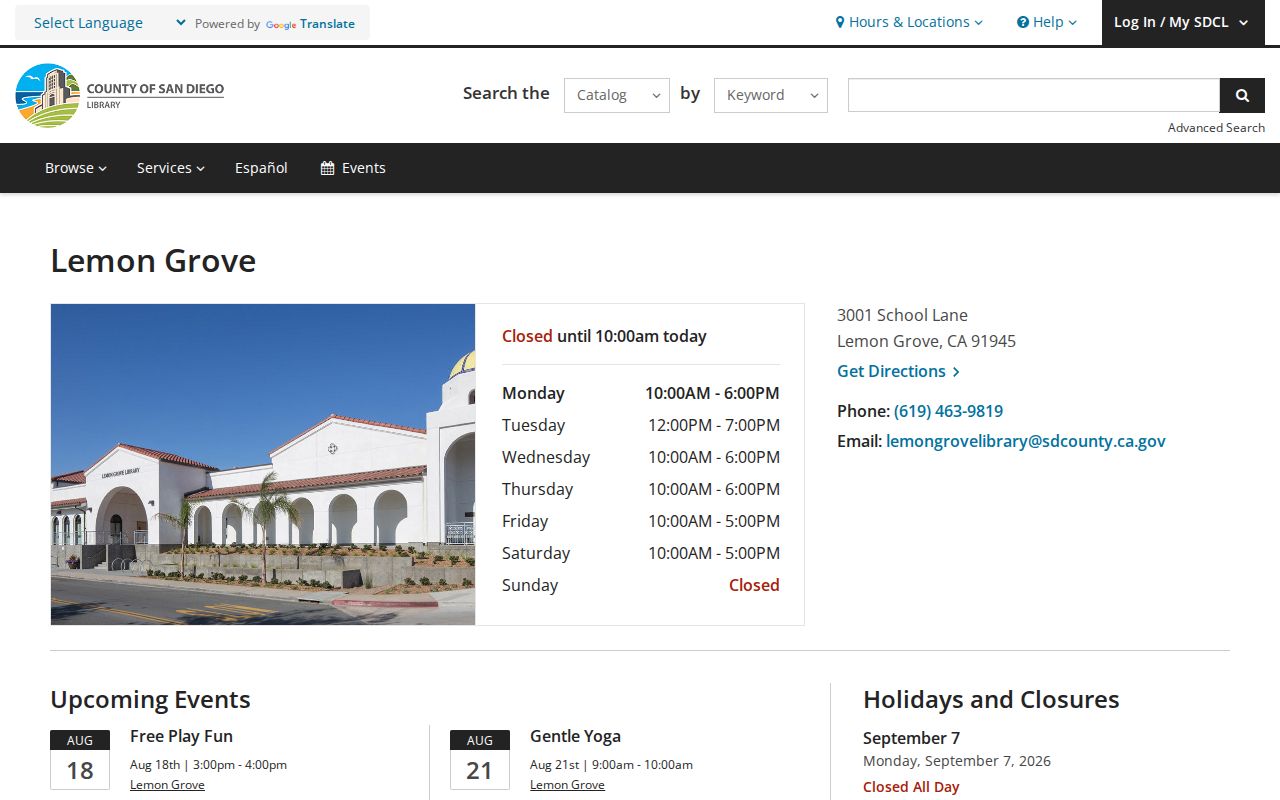
The branch is not Central Library Special Collections, but it offers a nearby place to ask about interbranch help and licensed resources before traveling.
Note: The long SDPL range is regional coverage, so confirm that a chosen volume actually includes Lemon Grove entries.
Lemon Grove's Pre-1977 Directory Bridge
Lemon Grove incorporated on July 1, 1977. Before that date, a household may appear under San Diego County, a suburban heading, a rural route, or a subdivision name rather than a city section. That history makes the separate San Diego suburban city directories from 1955, 1956, 1957, 1958, 1959, and 1960 especially useful for pre-incorporation Lemon Grove research.
Use the City of San Diego Digital Archives city-directory collection to open individual suburban volumes. The archive lists separate items, so a researcher can test a 1955-1960 address before using the physical shelf.
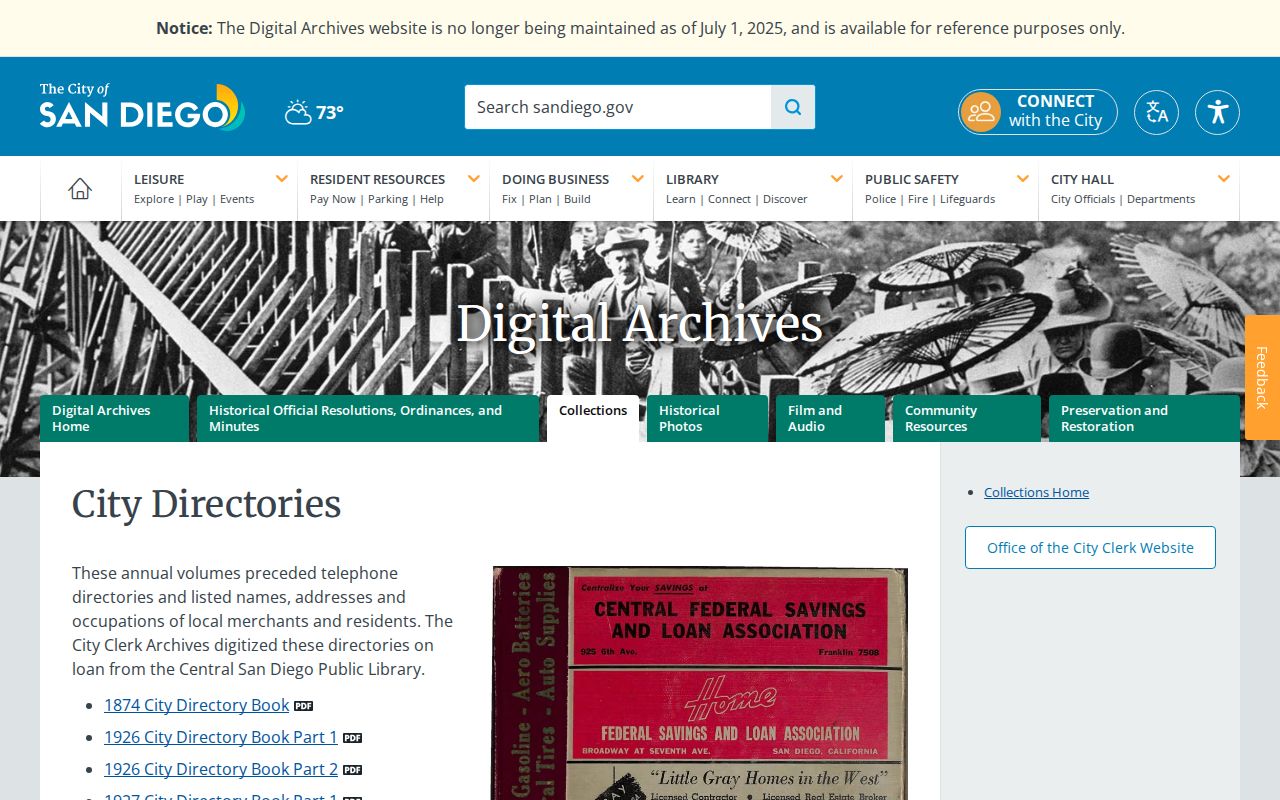
The same digital collection includes an 1874 directory and selected runs from 1926-1945, 1947-48, 1950, 1952, and 1953-54. San Diego Yesterday adds digitized volumes from 1887-1925 through the link carried by the SDPL California Collection. Those dates create a useful bridge, but they do not promise a Lemon Grove entry in every issue.
Insider tip. For a pre-incorporation household, test the 1955-1960 suburban volumes before assuming a city-only directory is the right shelf.
How a Lemon Grove Directory Entry Unpacks
A typical alphabetic entry in the San Diego city and suburban material can carry more than a name. Depending on the year, the line may include a surname, given name or initial, spouse in parentheses, occupation, business affiliation, home address, business address, and later telephone information. A widow marker or similar status note can become a genealogy clue, but it still needs a second source.
Fields matter as much as names. An address connects to a street section; a spouse or middle initial can separate same surnames; and a business line can point to a newspaper, permit, or local-history search. Treat abbreviations as edition-specific, not as a rule for all Lemon Grove directories.
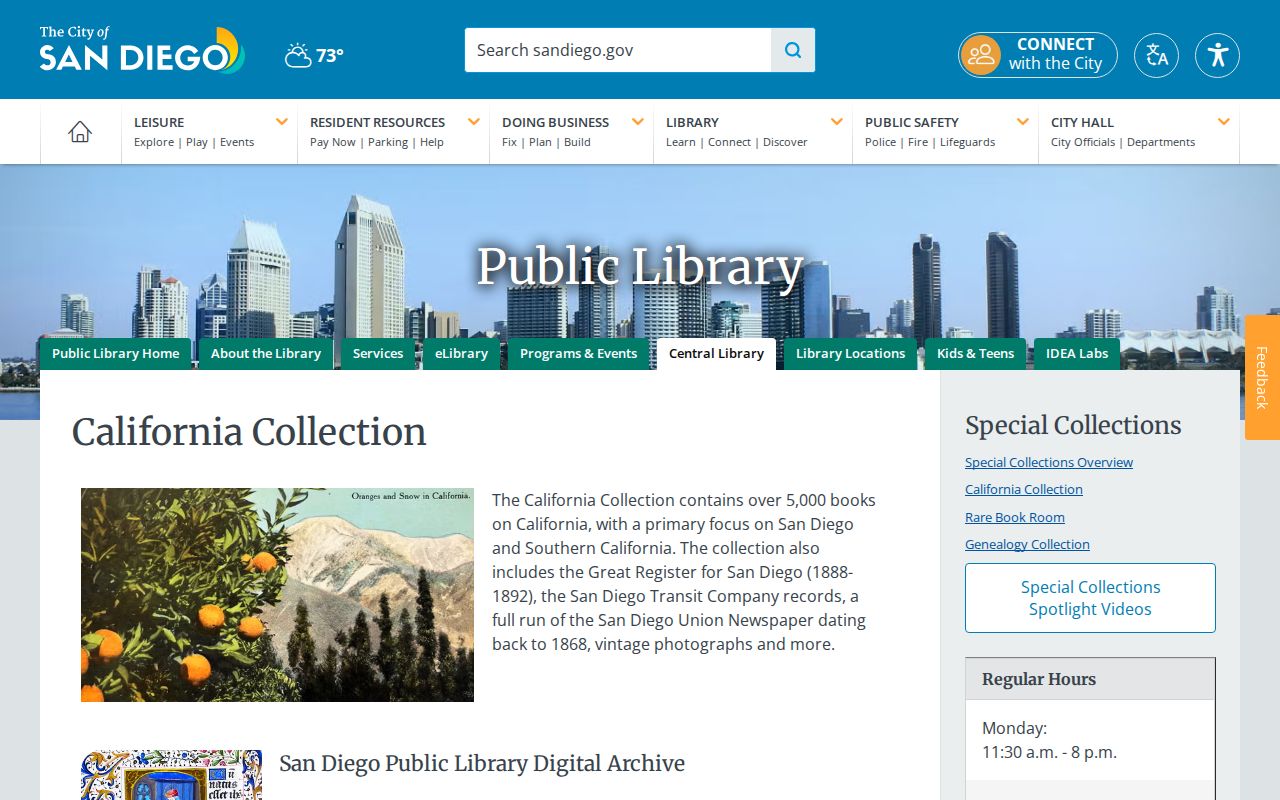
For a visual reference, open the SDPL California Collection source linked to the image below. It places the local material beside the broader directory, newspaper, Great Register, and map holdings.
| Name | Surname with given name or initial; a spouse may appear in parentheses. |
|---|---|
| Occupation or affiliation | An occupation or business affiliation when that edition prints one. |
| Address | Home address, and sometimes a separate business address; later editions may add a telephone number. |
| Tenure clue | Do not assume an owner or renter mark. In the local sample, “r” or “h” can indicate residence or home. |
| Status note | A widow marker or similar note may point to a family change worth checking elsewhere. |
- Criss-cross section
- The street-order part of a directory, usually arranged by street and house number with an occupant or business name.
- Householder index
- A name-focused route to the people listed for a home; check the volume's own layout before treating it as a complete household list.
- Abbreviation key
- The front-matter guide that explains that edition's short forms and marks. Read it before interpreting an entry.
Lemon Grove Directories in Street Order
The reverse or criss-cross section changes the question from “Who has this surname?” to “Who is listed at this street and number?” A typical street-order entry can show the street name, house number, occupant or business name, and sometimes a telephone number. It is particularly helpful when a family name is misspelled in the alphabetic section or when the address is known but the household name is not.
Copy the historical address exactly. Preserve a rural route, directional, subdivision, or older street spelling, then compare the same number in the issue before and after it. Nearby entries can show a block's local texture, but a blank number is not proof that a property was empty. It may reflect an unlisted name, a missing issue, or a different heading.
Once the question becomes current and parcel-based, use the Lemon Grove street-address directory for the modern address record chain instead of treating a historical street section as a present resident roll.
Note: A reverse directory places names near an address, while deeds establish ownership and the two records answer different questions.
Lemon Grove Directories Beside the 1950 Census
A household trail gains strength when directory years are paired with a census rather than read alone. As of 2026, federal census schedules through 1950 are publicly released. The 72-year rule places the scheduled public release of the 1960 census in 2032, so the 1955-1960 suburban directories can fill a mid-decade gap without pretending that a later census is already open.
- Start with a full name, middle initial, spouse, or approximate year, and find the earliest plausible alphabetic entry.
- Record the address exactly, then follow the name in the next available issue while noting each move.
- Flip to the criss-cross section to test the address, nearby entries, and alternate spellings.
- Pair the directory address with the 1950 or an earlier federal census schedule, keeping the date gap visible.
- Close a disappearance with the San Diego Union, a death index, cemetery material, or probate rather than guessing what happened.
A name that vanishes may signal a move, death, a missed edition, a different surname, or an unlisted household. Deeds answer the ownership question; directories answer the occupant and business question; newspapers and probate can explain a transition. When a historic hit needs a modern records check, the Lemon Grove resident lookup can help route the next verification step without collapsing the two eras.
Lemon Grove Directory Clues in California Revealed
The Lemon Grove Historical Society adds a local layer that regional city directories may only hint at. Its archive holds family collections, photographs, publications, buildings, and oral or community history. The society's archive and Parsonage Museum information is a starting point for finding aids and research arrangements, but the existence of an archive does not mean every item is online.
California Revealed supplies the searchable digital layer. Its Lemon Grove Historical Society partner collection includes local texts from the 1940s through the 1990s, giving a directory name a chance to meet a school, organization, business, or neighborhood story. The image below links to the partner collection and its item-level metadata.
The Parsonage Museum began in 1897 as Atherton Chapel, Lemon Grove's first local church. That detail can guide a community-history search without implying that the museum holds sacramental registers. A story such as Anton and Anna Sonka arriving from Bohemia in 1906 can be tested against directories, newspapers, deeds, and census schedules.
Use the California Revealed collection for digital discovery, then ask the Historical Society about uncataloged material with a name, date, and item clue.
Note: California Revealed exposes the digitized layer, while finding aids and uncataloged material require a direct Historical Society inquiry.
Lemon Grove Directory Fallbacks: Great Register, Maps, and News
When a city directory line ends, the nearby library collections can supply context rather than filler. The Great Register of San Diego covers 1888-1892 and is an official voter register held in the SDPL California Collection for in-person research. It belongs to an earlier civic record world, so use it as historical evidence, not as a modern open name directory.
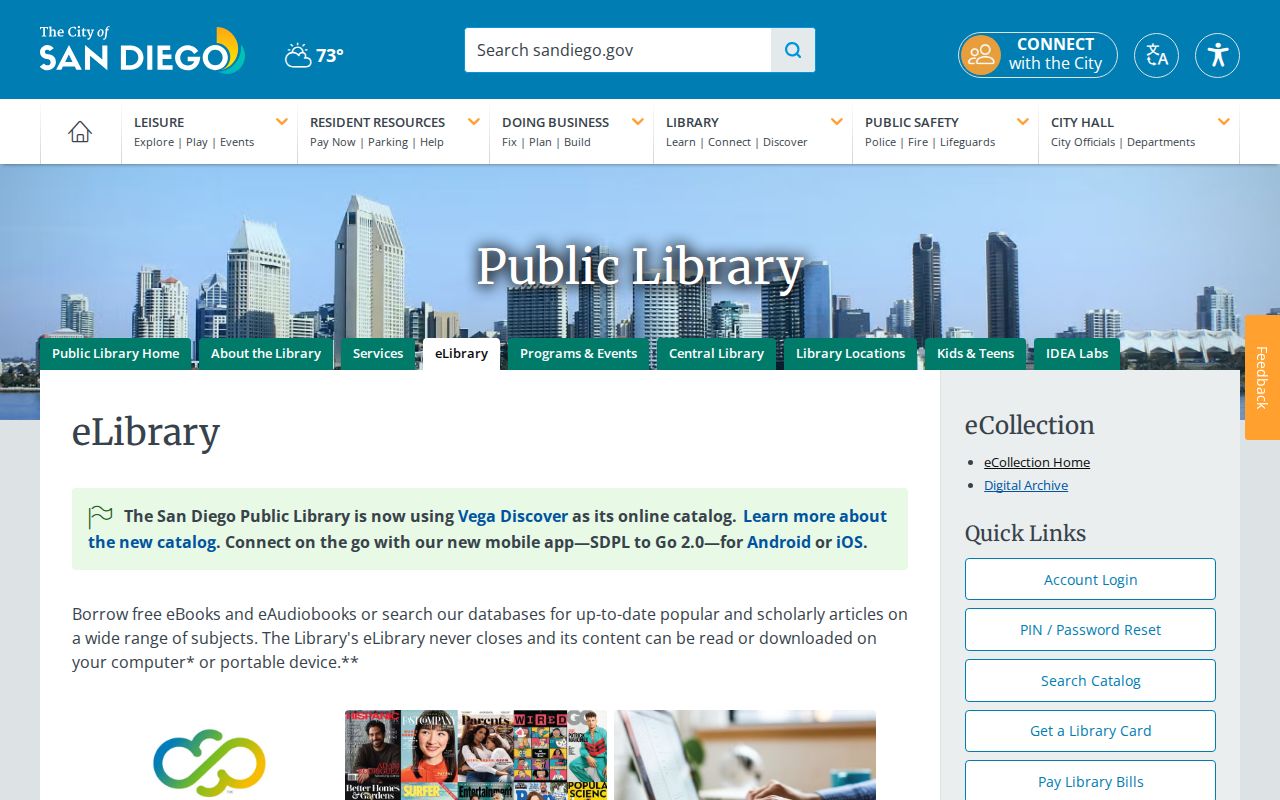
The San Diego Public Library eLibrary groups genealogy databases and Sanborn map access with other research tools. Consult the library eLibrary resource listing before relying on a database or map viewer; the image below points to that access layer.
- Great Register: the 1888-1892 San Diego run can add a historical civic identity clue.
- Sanborn maps: the California database universe spans 1867-1970, but exact Lemon Grove sheets are not fully inventoried.
- San Diego Union: the collection begins in 1868 and may be available on hard copy, microfilm, or digital formats depending on the year.
Library staff can help move between the directory shelf, newspaper files, map collection, and genealogy databases. If a scan is absent, ask about the physical volume or microfilm rather than treating an online gap as a records gap.
The Volume Key Behind a Lemon Grove Directory
The most useful quirk in a historical city directory is also the easiest to miss: the same small letter can change meaning from one volume to another. The local sample warns against reading “r” or “h” as a universal owner or renter code. In one edition a mark may point to residence or home, while an occupation short form may require a separate explanation.
Open the front matter first. Read the publisher's instructions, copy the abbreviation key, and note whether the issue has an alphabetic section, a street section, or both. Then transcribe the entry, page, edition, address, spouse note, and any status mark before comparing it with another year. This preserves the context that makes a name useful and keeps a directory clue separate from a fact proved by a deed, census, newspaper, or archive.
Volume key caution. Never assign owner, renter, residence, or business meaning to a mark until that particular directory explains it.
That small check is especially important in Lemon Grove's pre-1977 material, where regional headings and suburban formats carry the local story. A careful reader records the edition before drawing a family or address connection.